
This post may contain affiliate links, which means I may earn a small commission at no extra cost to you. I only share products I truly love and recommend.
October has a way of filling up quickly.
Between pumpkin patches, costumes, candy, school parties, and neighborhood festivities, it’s easy to find yourself wondering how you want your family to approach Halloween.
Maybe your family participates in traditional Halloween activities. Maybe you prefer to skip some of them. Or perhaps you’re somewhere in the middle, trying to find a way to enjoy the season while staying true to your family’s convictions.
Whatever that looks like for your home, you don’t have to make the decision complicated.
There are so many ways to enjoy October with your children, make meaningful memories, and create opportunities for conversations about Jesus.
And no, that doesn’t mean turning every pumpkin into a Bible lesson or making every family activity a formal devotional.
Sometimes you really can just bake cookies with your kids.
But you can also be intentional about the traditions you build, the things you celebrate, and the ways you help your children understand what matters to your family.
If you’re looking for Christian Halloween alternatives for kids, here are 15 ideas to get you started.
1. Host a Family Pumpkin-Carving Night
Pumpkin carving is one of those classic fall activities that doesn’t need much explanation.
Put on some music, spread newspaper across the table, and let everyone choose a pumpkin. Younger children can paint theirs or decorate them with stickers while older kids help scoop out the insides and design faces.
You could make the evening extra fun with apple cider, popcorn, or a simple fall dessert.
If you’d like to incorporate faith naturally, invite everyone to share one thing they’re thankful for while you work. You can even paint them if you’re avoiding “Jack-o-lanterns”.
Keep it simple. There’s no need to turn the entire evening into a lesson. A little gratitude and a lot of laughter are more than enough.
Here are some pumpkin decorating supplies for little hands for carving or for painting!
2. Have a Family Costume Party
If your family enjoys dressing up, you can still make costumes part of your fall traditions.
Invite your children to choose a favorite character, animal, Bible character, or something completely silly. Play music, take pictures, and let everyone show off their costumes.
For younger children, the goal is simply to have fun together.
If your family prefers costumes with a faith connection, you might dress up as characters from a favorite Bible story and read that story together.
Or skip the theme altogether and have a living-room fashion show.
The point isn’t to make your family’s celebration look a certain way. It’s to choose traditions that fit your convictions and help your children enjoy being together.
3. Plan a Fall Family Movie Night
Choose a family-friendly movie, make popcorn, pile up the blankets, and let everyone settle in for a relaxing evening.
You could choose a movie about courage, kindness, friendship, or helping others. Afterward, ask your children what they liked about the story.
For older children, you might ask a question like, “What did you notice about the way that character treated other people?”
You don’t need to find a profound takeaway every time you watch a movie. Sometimes a shared experience is enough.

4. Bake Fall Treats Together
Few things make a house feel like fall quite like something baking in the oven.
Choose a simple recipe for pumpkin muffins, cinnamon cookies, apple crisp, or another family favorite.
Let your children help stir, pour, measure, and decorate. Yes, it will probably be messier than doing it yourself. That’s part of the experience.
While you work, talk about what you’re enjoying about the season. You could share something you’re grateful for or talk about how God provides good things for us to enjoy.
If your children are old enough, let them help choose a treat to make for a neighbor or friend.
5. Go on a Fall Nature Walk
Put on your jackets, head outside, and see what you can find.
Look for colorful leaves, acorns, pinecones, interesting rocks, and signs that the season is changing. Let your children collect a few treasures to bring home if appropriate for the area.
If you’d like to connect the experience to Scripture, read Psalm 19:1 together:
“The heavens declare the glory of God; the skies proclaim the work of his hands.”
Talk about the things you notice in creation.
You don’t need a long explanation. A simple conversation about the world God made can be meaningful all on its own.
End the Day With a Little More Jesus 🤍
Bedtime doesn’t have to be complicated to be meaningful.
Bedtime Blessings for Little Hearts is a simple printable with Scripture-based blessings you can speak over your child before they fall asleep.
No long devotional. No complicated routine. Just a few words of truth and a quiet moment together.
A little reminder for the end of a busy day:
Jesus loves you. Jesus is with you. And you are never alone.
[GET YOUR FREE BEDTIME BLESSINGS PRINTABLE →]
6. Create a Family Gratitude Tree
This is an easy activity for families with children of different ages.
Cut leaves from construction paper or use pre-cut paper leaves. Write something you’re thankful for on each leaf, then attach the leaves to a paper tree on the wall.
Younger children can draw pictures instead of writing.
Add a few leaves each day throughout the week. You might include family members, friends, favorite foods, answered prayers, or something beautiful you noticed outside.
When the tree is full, take a few minutes to read the leaves together.
You could also read Psalm 107:1:
“Give thanks to the Lord, for he is good; his love endures forever.”
7. Have a Family Worship Dance Party
Here’s an idea that draws on one of my favorite parts of building faith at home: music.
Put on a few worship songs your children love and let them dance, sing, clap, or play along with toy instruments.
You don’t need a perfectly planned family worship time. You don’t even need everyone to participate in the same way.
Choose a few songs with lyrics that teach something true about God. Let your children enjoy the music, and when a lyric stands out, take a moment to talk about what it means.
For young children especially, music can give them words for truths they are still learning to understand.
And sometimes, the best family worship night involves considerably more dancing than singing.
8. Make Care Packages for Someone Who Needs Encouragement
One way to make the season meaningful is to help your children think about people outside your own family.
Choose someone who could use encouragement: a neighbor, a friend who is going through a difficult season, a church member, or someone who might appreciate a little kindness.
Put together a small package with homemade cookies, a handwritten note, drawings from the children, or a few practical items.
If you know someone who is lonely or having a hard week, consider delivering the package together.
You can explain that following Jesus includes learning to love and care for other people.
Read 1 John 4:19 together: “We love because he first loved us.”
Then let your children participate in the giving.
9. Visit a Pumpkin Patch or Apple Orchard
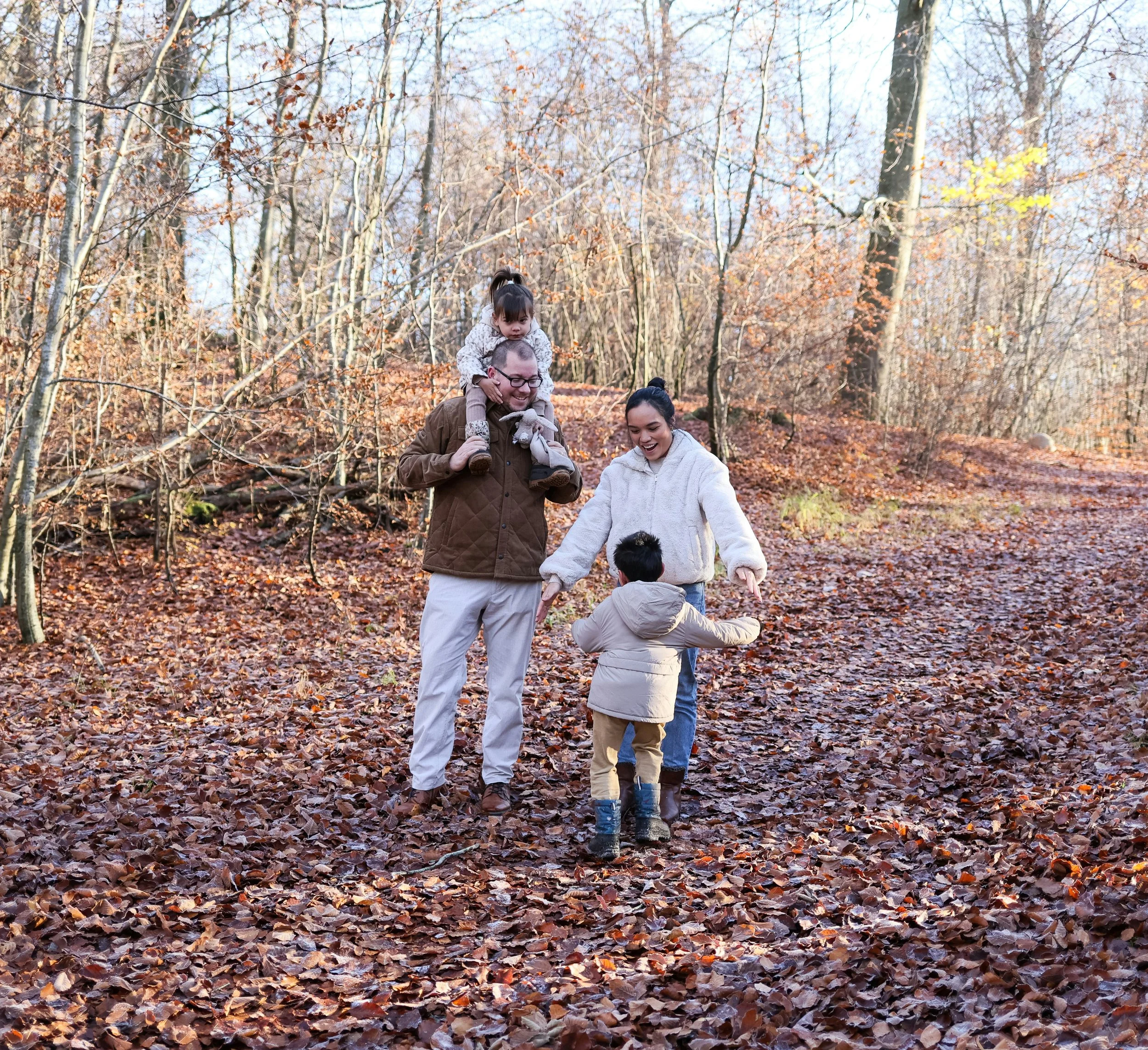
If you haven’t made it to a pumpkin patch or apple orchard yet, this is a lovely time to plan a family outing.
Let your children choose a pumpkin, pick apples, explore the farm, or enjoy whatever activities are available.
You can keep the day simple. Take pictures, eat apple cider donuts, and let the kids run around.
If you want to add a faith connection, talk about the changing seasons, the food you enjoy, or the people whose work helps bring food to your table.
But don’t feel obligated to make the outing into a devotional. You can enjoy God’s creation and spend time together without narrating a spiritual lesson every five minutes.
10. Read Bible Stories by Candlelight
As the evenings get darker, take advantage of the natural opportunity to slow down.
Turn off the television, gather under a blanket, and read a favorite Bible story together.
You could read about Jesus welcoming children, David and Goliath, Daniel in the lions’ den, or another story your children enjoy.
Ask a simple question afterward:
“What did you notice about God in that story?”
There isn’t one perfect answer you’re trying to get from them. You’re helping them begin to notice who God is and what He is like.
If your children are young, keep the reading short enough that everyone can enjoy it.
11. Host a Fall Game Night
Sometimes the simplest activities are the ones children remember most.
Choose a few age-appropriate games, put out some snacks, and let everyone join in.
You could try a fall-themed scavenger hunt, a matching game, a simple board game, or a guessing game with objects hidden inside a bag.
If you have children of different ages, choose activities that allow the younger ones to participate without making the older ones feel as though they’re playing a game designed for toddlers.
The goal is to enjoy one another.
You can also use the evening as an opportunity to model patience, kindness, and graciousness when someone loses. Those lessons often arise naturally during family games.
Choose games that genuinely fit your children’s ages rather than recommending products simply because they’re popular.
12. Make a Thank-You Basket for Community Helpers
Choose a group of people who serve your community and find a simple way to thank them.
Depending on your family’s circumstances, you might make cards for firefighters, assemble a small basket for church volunteers, or bring a treat to a neighbor who regularly helps your family.
Before delivering anything, check whether the intended recipients can accept gifts or homemade food.
Let your children help decorate the cards or choose what to include.
This is a practical way to talk about gratitude and the importance of noticing other people.
You might ask your children, “Who helps our family or community that we don’t always think about?”
Then brainstorm a way to show appreciation.
13. Start a Family Prayer Jar
A prayer jar can become a simple way to help children learn that they can talk to God about real things happening in their lives.
Find a jar or container and fill it with slips of paper. Write down prayer requests, people your family wants to pray for, things you’re thankful for, and situations where someone needs help.
You can color-code the slips if your children enjoy that.
At dinner or bedtime, choose one or two slips and pray together.
For young children, keep the prayers short and natural. They don’t need to use grown-up words or know exactly what to say.
The goal is to help them see prayer as a real conversation with God, not just something they do because it’s time to pray.
14. Make a Family Blessing Book
Find a blank notebook or scrapbook and dedicate it to recording the things your family wants to remember.
You might include:
A favorite family memory
Something you’re thankful for
A prayer God has answered
A Bible verse your family is learning
A picture your child drew
A note about something you appreciate about one another
You don’t have to add something every day. Once a week—or even once a month—is enough to begin.
As the book grows, it can become a meaningful record of your family’s life and faith.
Your children may especially enjoy looking back at their own drawings and remembering what mattered to them when they were little.
15. Create Your Own Family Tradition
Perhaps the best alternative to following someone else’s idea of the perfect holiday is to decide what your family actually enjoys.
Maybe you make homemade pizza and watch a movie every October 31.
Maybe you invite friends over for a bonfire.
Maybe you spend the evening handing out candy, attending a church event, or staying home in pajamas.
Maybe you don’t celebrate Halloween at all.
Our family starts our Christmas celebration on October 31st with an annual trip to a cool Christmas store. We make a big deal of the day, bake a Christmas treat, put on our funny Christmas shirts and have a great time.
One thing I always admired about how my parents handled Christmas was by making it WAY more fun than what they were doing at school. They took us out of school before the Halloween party started and took us on a big family outing and we always had a blast.
Christian families approach this season differently, and you don’t have to copy another family’s choices to be intentional about your own.
Talk with your spouse about what matters to you. Consider your children’s ages, your convictions, your community, and the kinds of traditions you want to build.
Then choose something you can enjoy without creating a lot of unnecessary stress.
If you’re looking for another easy faith rhythm, grab my free Bedtime Blessings for Little Hearts printable.
It’s designed to help you end the day with a simple Scripture-based blessing over your children.
→ [Download Bedtime Blessings for Little Hearts]
How to Keep Faith at the Center Without Making Everything Complicated
As you choose activities for your family, remember that you don’t have to make every moment into a spiritual lesson.
Your children can learn about God’s goodness while you read Scripture together, pray before bed, sing worship songs, serve a neighbor, or talk about something that happened during the day.
They can also enjoy baking cookies, running through leaves, playing games, and laughing with their family.
Faith isn’t something we have to force into every activity. It’s something we can nurture through the way we live, the truths we return to, and the relationship we help our children develop with Jesus.
One of my favorite things about teaching children to know Jesus personally is that they can learn to turn toward Him in all kinds of circumstances—not only during a formal family devotional.
They can talk to Him when they’re afraid, ask for His help when they’re frustrated, thank Him when they’re happy, and learn who He is through Scripture and worship.
Those habits take time. They grow through repetition, relationship, and the example we set as parents.
And they don’t require a perfect home or a perfectly planned family calendar.
If you’re looking for more ideas, start with one of these simple next steps:
Read [How Music Shapes Faith in Young Children] to explore how music can help children remember biblical truth.
Visit [How to Pray With Your Children (Even If You Don’t Know What to Say)] for practical ideas you can use at home.
Explore [How to Create a Fall Family Rhythm That Points Your Children to Jesus] for more seasonal inspiration.
Choose one idea that fits your family this week. You can always add more later.
A Final Encouragement for Moms
You don’t need to create an elaborate alternative to Halloween to be a faithful Christian mother.
You don’t need a Pinterest-perfect celebration, a house full of activities, or a new tradition for every season.
You simply have the opportunity to make thoughtful choices about the life you’re building with your children.
Some families will celebrate Halloween in familiar ways. Others will choose different activities. Both decisions can be made thoughtfully, prayerfully, and with care for your children.
Instead of worrying about creating the perfect October, focus on what matters to your family and choose a few ways to enjoy the season together.
And when you have an opportunity to help your children notice God’s goodness, learn Scripture, pray, or worship, take it.
Not because every moment has to be meaningful, but because knowing Jesus is worth making room for in the life you’re already living.
You got this momma.
Xoxo,
Alex
